

Why We Registered Reelnosh Before Building the Platform
Registering a company does not mean the work is finished.

Kudirat Ijeoma
Founder & CEO, Reelnosh
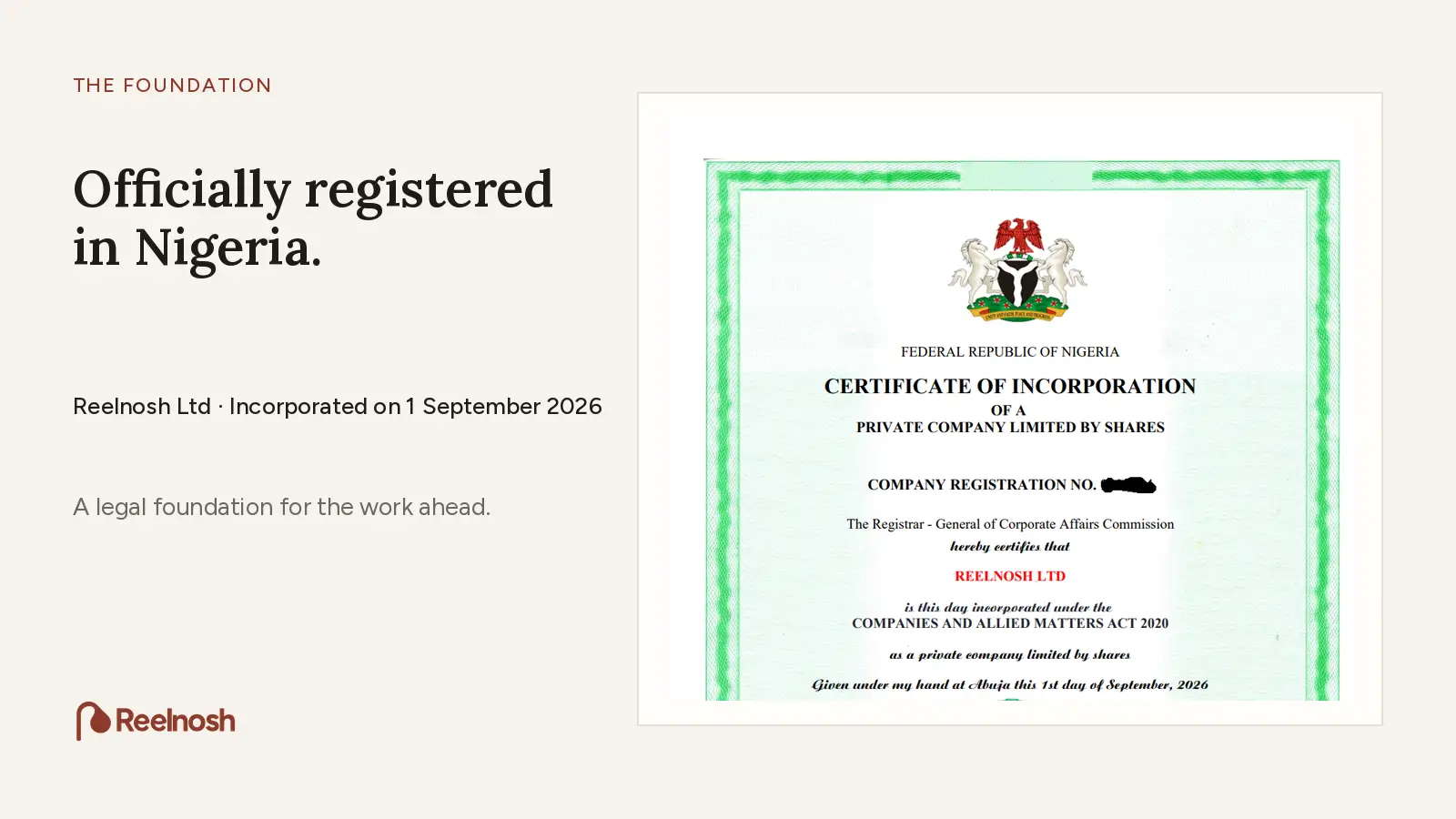
Registering a company does not mean the work is finished.
For Reelnosh, it means we are giving the work a stronger foundation while we continue learning what needs to be built.
On 1 September 2026, Reelnosh Ltd was incorporated in Nigeria as a private company limited by shares.
The certificate is an important milestone.
But it is not the end of the journey.
An idea needs room to become a business
Reelnosh began with a question:
What happens when food people discover online can become something they actually experience in real life?
Food creators already create appetite through their content.
People see a meal, save the post, share it with someone and comment: “I need this.” But that interest does not always have a clear path to becoming an order.
Creators may not know how many people genuinely want the meal.
They may not have a simple way to manage demand.
Customers may not know whether the food is available, how to order it or when they can receive it.
Reelnosh is exploring that gap through Reelnosh Drop.
A Drop is a limited food experience made available to people who want to discover and order what a creator has made.
We are currently testing this process manually.
We are working with the steps before building software around them.
Registration does not replace validation
It can be tempting to think that registering a company means a startup has officially arrived.
But incorporation does not validate the business model.
It does not prove that creators will participate.
It does not prove that diners will order.
It does not answer every operational question.
Those answers still have to be discovered through real conversations and real Drops.
What registration gives us is a formal structure from which to continue that work.
It gives Reelnosh an identity beyond an idea.
It creates a foundation for partnerships, operations and the decisions that will come as the business develops.
But the most important work remains the same: Understand the problem. Test the assumptions. Learn from what happens. Build what the experience actually needs.
Why we are starting manually
We have not built an app yet.
That is intentional.
Before automating the process, we want to understand it.
How does a creator decide what to make? How many servings can they realistically prepare? How do people express interest? What information do diners need before ordering? How should payment and confirmation work? What happens when more people want the meal than there are available servings? How should the handoff happen?
These questions are easier to answer when we are close to the experience.
A manual process may not be the final form of Reelnosh.
But it allows us to observe the behaviour behind the product before turning our assumptions into software.
We would rather learn the system before automating the system.
What this milestone means
Registering Reelnosh is a commitment to keep doing the work.
It is a commitment to take the idea seriously enough to give it structure, while remaining honest about what we do not know yet.
There is still a lot to learn.
We are still validating creator behaviour, diner demand and the operational flow behind Reelnosh Drop.
We are still asking whether the experience is useful, repeatable and valuable to the people involved.
The company registration does not mean we have solved the problem.
It means we are creating the foundation to solve it properly.
The work continues
Reelnosh is exploring how food content can become real-world participation.
Not every meal needs to become a permanent menu. Not every creator needs to become a restaurant. Not every part of the experience needs to be built at once.
Sometimes, the next step is not adding more features.
Sometimes, it is creating the structure that allows the learning to continue.
Reelnosh is now officially registered.
The work of understanding, testing and building continues.
Reelnosh Where food content becomes meals.
Stay close to what
we're building.
Join the Foodies Club on WhatsApp for early Drop updates, food conversations, and a say in the experiences we explore.
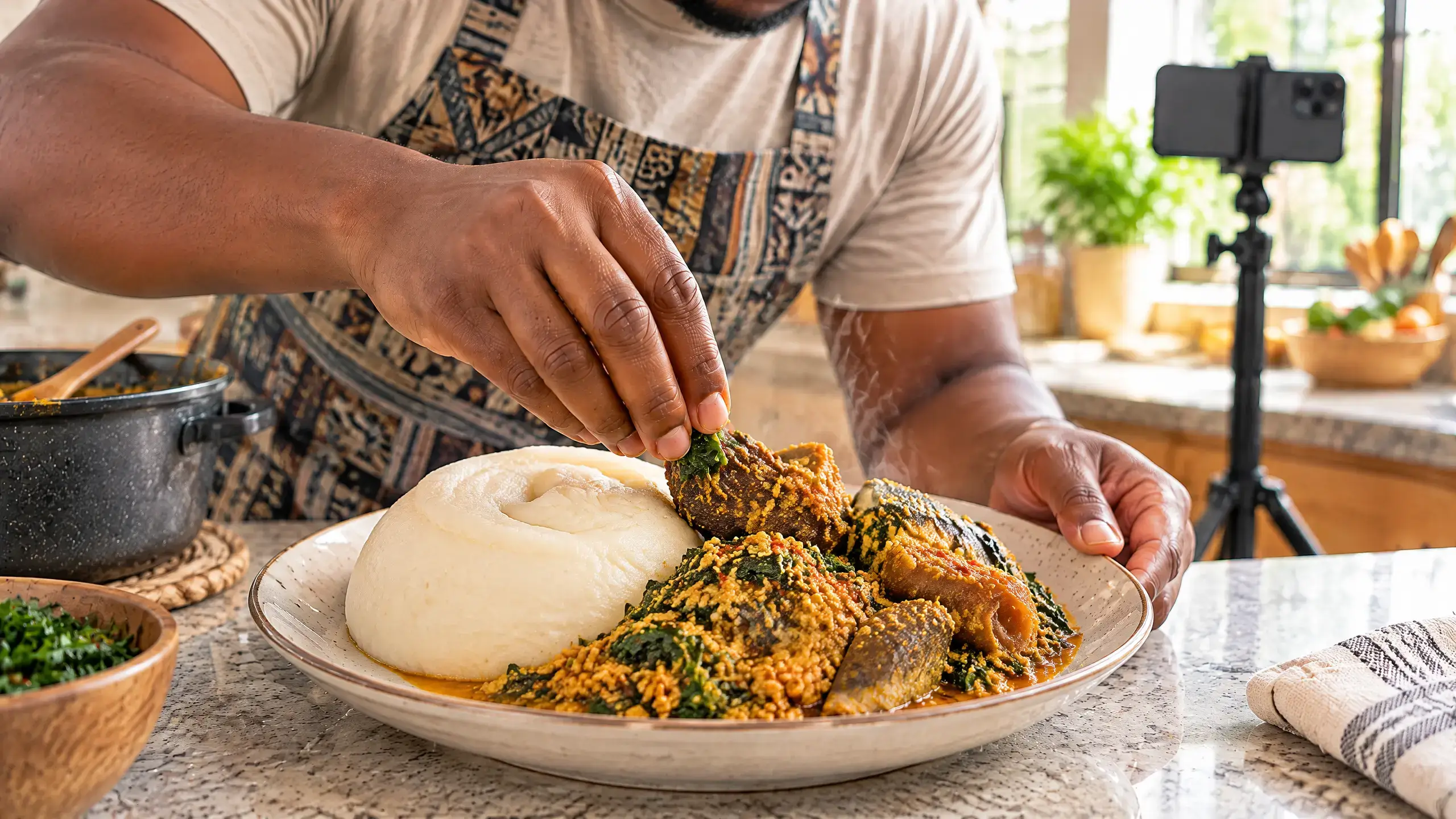
Why We're Not Building Delivery Yet
Reelnosh is choosing to understand the food experience before building delivery infrastructure around it.
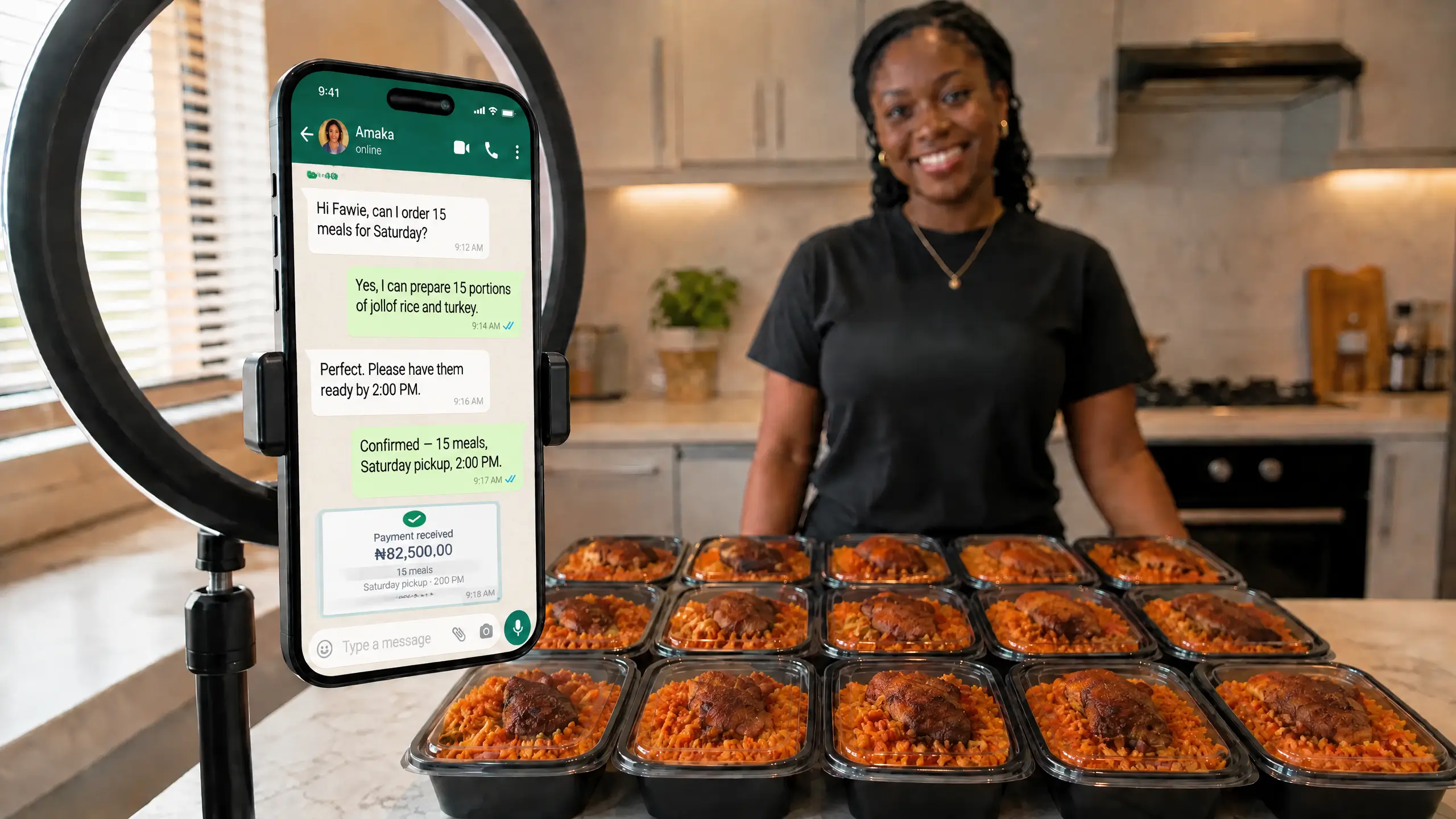
Why Food Creators Need You to Order Ahead
Food creators often ask customers to order 24–48 hours ahead so they can plan production, control costs, and reduce waste. But when advance ordering is the only way to buy, it can leave out people who discover the food today and want to eat it now.
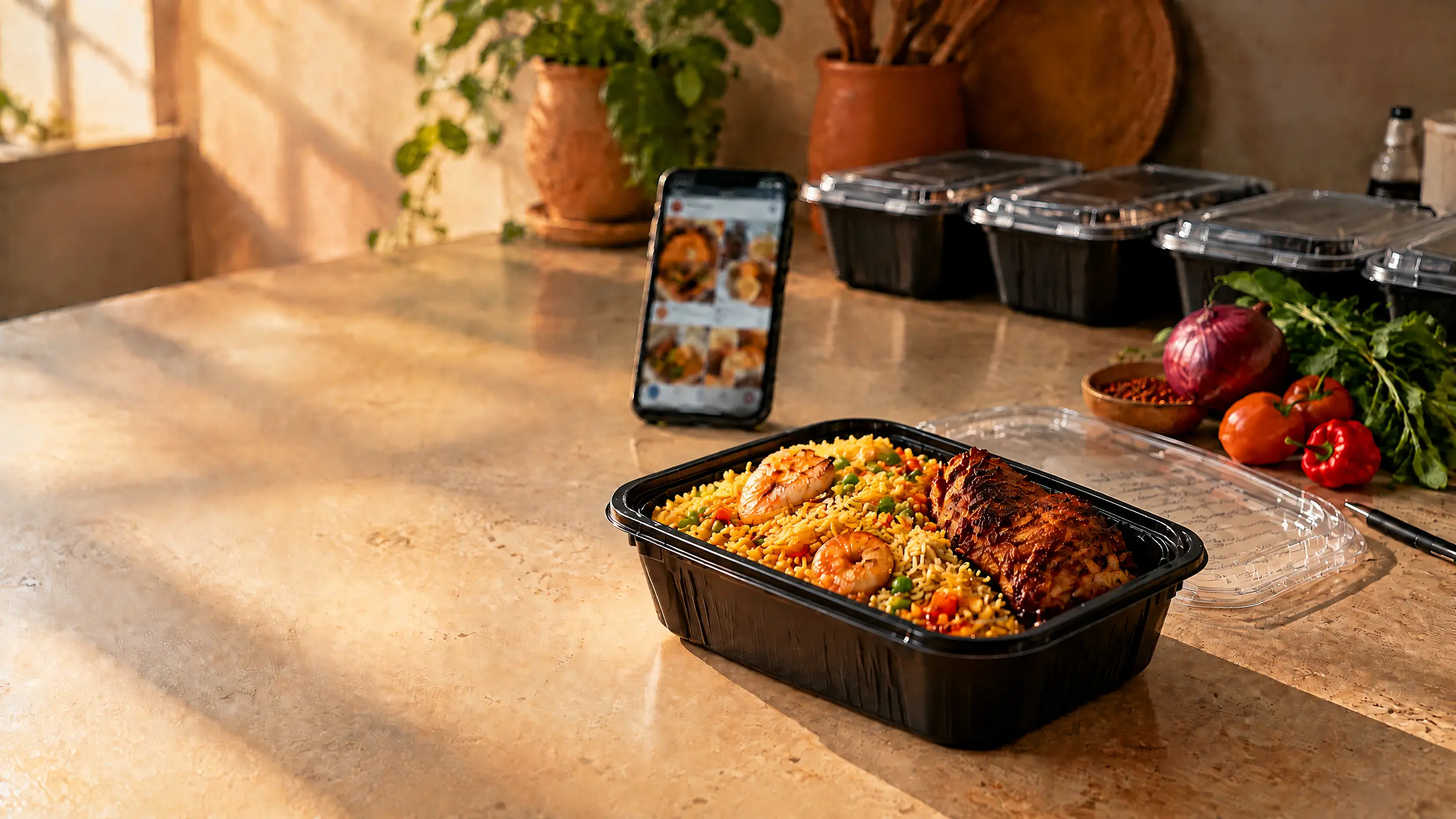
What Predictable Demand Could Mean for Food Creators
What if creators could understand how many people actually want their food before they make it? Predictable demand could change how culinary creators think about cooking, selling, and building sustainable food businesses.